1-732-586-0439


From human GI biology to predictive translational models
Human GI epithelial and mucosal systems integrating multidimensional functional readouts of epithelial integrity, immune signaling, transport, injury, repair, and therapeutic response provide a foundation for disease biomarker and molecular target identification, therapeutic discovery and development, and predictive translational models of response, resistance, and tissue toxicity.


Mayur Doshi
Co-Founder, CEO
Asit Panja, MD, AGAF, ABAARM
Founder, CSO — Scientific Research Team
About Alfagene
AlfaGene is a human GI translational biology company dedicated to advancing the understanding and modeling of gastrointestinal mucosal biology to accelerate therapeutic discovery and development.
We specialize in GI mucosal immunology, epithelial barrier function, inflammatory bowel disease, colorectal cancer, biomarker and therapeutic target discovery, preclinical GI toxicology, and mechanism-of-action studies. Our human GI epithelial and mucosal model systems support disease-mechanism research, therapeutic evaluation, and translational assessment of efficacy, resistance, and normal-tissue liability.
Our goal is to connect human GI biology with therapeutic development through functional, biologically relevant translational models.
Physician-scientist backgrounds · expertise in human GI epithelial/stem cell systems · scientific publications and patents.
AlfaGene Bioscience is advancing a human tissue-derived approach designed to connect molecular observations with measurable epithelial function. The objective is to help research and development teams make better-informed decisions about disease biology, therapeutic activity, delivery, safety and patient-relevant response.
Core Differentiation
-
Patient-derived, non-transformed human gastrointestinal stem, progenitor and differentiated epithelial cells
-
Normal, inflammatory and malignant tissue systems, including matched colorectal tumor and normal tissues
-
Segment-specific gastrointestinal biology spanning the stomach, small intestine, colon and rectum
-
Planar and polarized systems providing experimental access to apical and basolateral epithelial functions
-
Integration of functional, molecular, donor, disease and treatment-response data
-
Mucosal immune-cell expertise supporting studies of immune-epithelial interactions

Focused Development Programs
Program 2
Transport, Therapeutic Screening and Preclinical GI Safety
Program objective.
Apply validated planar and polarized human epithelium to drug and nutrient transport, formulation performance, therapeutic screening and preclinical GI safety.
R&D gap addressed: Drug and formulation programs often lack human, segment-resolved evidence connecting transport with safety. AlfaGene supports earlier candidate selection, delivery optimization and identification of GI liabilities in segment specific manner.
Program 3
Colorectal Oncology
Program objective.
Use patient-matched colorectal tumor and normal epithelium to evaluate disease-selective targets, biomarkers, therapeutic response, resistance and normal-tissue safety.
R&D gap addressed: Tumor targets may also occur in normal epithelium. Alfagene's patient-matched systems (normal and diseased from same patient) test tumor selectivity and identify normal-tissue liabilities at initial stage of disovery and development.
Program 1
GI Inflammation and Barrier Biology
Program objective:
Validate human epithelial systems from normal, Crohn's disease and ulcerative colitis tissues using quantitative measures of GI segment resolved barrier function, immune signaling, injury, repair and mechanism of action.
R&D gap addressed: Current models often obscure epithelial-specific mechanisms. AlfaGene links molecular changes to functional human outcomes while preserving donor, disease and anatomic context.

-
Patient-matched inflammation signature
-
Inflamed versus non-inflamed epithelial profile
-
Barrier dysfunction and restoration profile
-
Disease-associated biomarker and target shortlist
-
Immune–epithelial interaction profile
-
Therapeutic response or resistance phenotype
-
Candidate prioritization and decision support
OUTPUT EXAMPLES
Value Statement
Patient-matched inflamed and non-inflamed epithelial systems help distinguish inflammation-associated changes from underlying patient variability and connect molecular findings with functional human epithelial outcomes.
Platform: Human GI Inflammation and Barrier Biology Platform
Patient-Matched Biological Systems: Healthy-donor and anatomically matched control systems may provide additional reference comparisons.

-
Segment-specific permeability profile
-
Directional transport measurements
-
Candidate or formulation comparison
-
Region-specific absorption or delivery performance
-
Inflammation-dependent transport profile
-
Epithelial injury and recovery profile
-
Early GI-liability assessment
-
Integrated candidate ranking
-
Go / iterate / no-go decision support
OUTPUT EXAMPLES
Value statement:
Segment-resolved planar and polarized human GI epithelial systems provide controlled surface access and quantitative functional measurements for transport, therapeutic screening and preclinical GI safety.
Platform: Segment-Resolved Planar and Polarized Human GI Epithelial Platform
AlfaGene’s platform uses patient-matched tumor-derived and adjacent-normal epithelial/stem cell systems, together with broader normal epithelial panels, to evaluate whether tumor-associated biomarkers are sufficiently differentiated from normal tissues.
Platform: Human Tumor-Normal Epithelial Target Engine
AlfaGene’s platform uses patient-matched tumor-derived and adjacent-normal epithelial/stem cell systems, together with broader normal epithelial panels, to evaluate whether tumor-associated biomarkers are sufficiently differentiated from normal tissues.

-
Tumor-enrichment profile
-
Matched-normal liability assessment
-
Segment-resolved normal epithelial expression context
-
Target prioritization score
-
Modality-fit recommendation
-
Go / iterate / no-go decision support
OUTPUT EXAMPLES
Value Statement:
AlfaGene’s paired tumor-derived and adjacent-normal epithelial/stem cell systems add a critical dimension beyond conventional platforms by testing whether colorectal cancer stem-cell–associated signals are tumor-enriched, reproducible, and distinguishable from matched normal human epithelial/stem cell biology.
Technology Differentiators: How AlfaGene Fills Translational R&D Gaps
Persistent R&D Gap
-
Limited human disease context
-
Biological heterogeneity is obscured
-
Molecular findings lack functional validation
-
Improved transport may compromise barrier safety
-
GI liabilities emerge late
-
Tumor targets may affect normal tissue
-
AI models lack biologically meaningful labels
AlfaGene Differentiator
-
Patient-derived normal, inflammatory and malignant epithelium
-
Donor- and GI segment-resolved systems
-
Linked molecular and epithelial functional readouts
-
Concurrent transport and barrier-integrity assessment
-
Human epithelial injury, inflammation and recovery assays
-
Patient-matched colorectal tumor–normal systems
-
Structured, contextual human datasets
Decision Value
-
Human-relevant disease and response comparisons
-
Detect variable response, transport and toxicity
-
Validate meaningful biomarkers and targets
-
Optimize delivery benefit–risk
-
Identify candidate and formulation liabilities earlier
-
Assess tumor selectivity and normal-tissue risk
-
Improve predictive modeling and candidate ranking
Technology Capabilities Supporting the Programs
These complementary capabilities support all three programs and can be configured around a partner-defined R&D decision.
Patient-Derived GI Stem and Epithelial Cell Systems
AlfaGene's foundational capability centers on non-transformed human gastrointestinal stem, progenitor and differentiated epithelial cells derived from normal, inflammatory and malignant tissues, Normal, Crohn's disease and ulcerative colitis epithelium, including inflamed and non-inflamed regions where available.

Functional Barrier, Transport and Safety Systems
Planar and polarized systems provide apical and basolateral access for quantitative studies of barrier function, directional transport, therapeutic activity and GI safety, following application-specific validation for Barrier function regulation.

E-Cadherin - Green
DAPI - Blue
Electron micrograph of Polarized epithelial monolayer (Small intestine) showing tight junction and microvilli expression
Published AlfaGene research supports studies of how tissue-resident and circulating immune cells influence epithelial signaling, injury and repair. It can be used to study Intraepithelial and lamina propria lymphocyte interactions with epithelium.
Mucosal Immune and Epithelial Interaction Systems

-
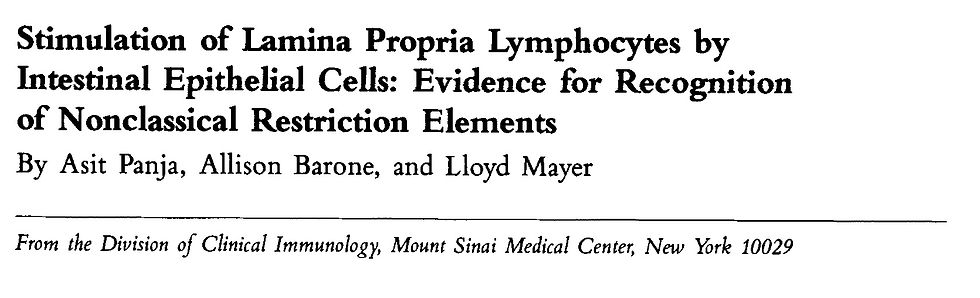
Panja A, Barone A, Mayer L. Stimulation of lamina propria lymphocytes by intestinal epithelial cells. Journal of Experimental Medicine. 1994; 179:943–950.
-
Asit Panja,* Richard S. Blumberg CDld Is Involved in T Cell-Intestinal Epithelial Cell Interactions. J. Exp. Med. Volume 178 1115-1119
Biomarker, Molecular Target and Predictive Outcomes Capability
Integrate functional outcomes with molecular data and metadata covering donor, disease, GI segment, cell state, treatment and matched controls to study disease-selective biomarkers, molecular targets and cell-surface antigens

Phase contrast micrograph of cultured normal and diseased colonic epithelial cells.
RT-PCR analysis from the normal and diseased cells from the same individual showing differential gene expression
Predictive Translational Models and AI/ML Opportunity
AlfaGene's human GI systems can generate context-rich functional and molecular data for computational models of therapeutic response, resistance, transport and tissue toxicity.
What Makes the Data Potentially Valuable
Human tissue with donor, disease and GI-segment context
Matched diseased and normal comparisons
Linked molecular and functional measurements
Defined exposures, treatments and outcomes
Quality-controlled labels connecting biological signals to measurable phenotypes
Potential Computational Applications
-
Therapeutic response, non-response and resistance
-
Candidate and target prioritization
-
Segment-specific transport and delivery performance
-
Epithelial and normal-tissue toxicity
-
Patient or disease-subtype stratification
-
Experimental-design optimization and hypothesis generation
Development position. AI/ML is a prospective analytical layer and collaboration opportunity. AlfaGene does not currently claim a proprietary validated AI platform.
Application Areas
The focused programs establish AlfaGene's initial priorities. The same underlying capabilities may support additional applications when scientifically justified and validated for the intended context of use.
-
Inflammatory Bowel Disease
-
Colorectal Oncology
-
Drug Transport and Oral Delivery
-
Preclinical GI Toxicity
-
Epithelial Injury and Regenerative Repair
-
Nutrition, Nutraceuticals and Food Bioactives
-
Mucosal Infection and Virology
-
Broader Epithelial Solid Tumors
Evidence and Scientific Foundation
Patents
AlfaGene has issued patent protection covering antigenic biomarker discoveries relevant to gastrointestinal disease and cancer.
ISSUED U.S. PATENTS
4
ISSUED EUROPEAN PATENT
1
Issued Patents
-
Human Gastrointestinal Stem Cell-Derived Primary Intestinal Epithelial Cell System and Methods of Use Thereof:
-
US Patent 8,367,316 B2
-
US Patent 9,212,382 B2
-
Biomarkers for Gastrointestinal Diseases
-
US Patent 9,267,935 B2
-
US Patent 10,087,488
-
Drug Discovery Methods Involving a Preclinical Gastrointestinal Epithelial Stem Cell Platform:
-
European Patent EP2279245B1
Mucosal Immunology & Inflammatory Disease:
Selected Foundational Publications:
-
More than 30 peer-reviewed scientific publications
-
More than 80 peer-reviewed scientific abstracts presented at national and international meetings
Novel Human Intestinal Epithelial Cell Platform
-
Panja A. A novel method for the establishment of pure populations of non-transformed human intestinal primary epithelial cell (HIPEC) lines in long-term culture. Link: https://www.nature.com/articles/3780154
-
Panja A, Barone A, Mayer L. Stimulation of lamina propria lymphocytes by intestinal epithelial cells. Journal of Experimental Medicine. 1994; 179:943–950.
-
Asit Panja,* Richard S. Blumberg CDld Is Involved in T Cell-Intestinal Epithelial
Cell Interactions. J. Exp. Med. Volume 178 1115-1119 -
Panja A, E. Siden and L. Mayer. 1995. Synthesis and regulation of accessory/proinflammatory cytokines by intestinal epithelial cells. J. Clin. Exp. Immunol. 100:298-305.
-
Panja A, S. Goldberg, L. Eckmann, P. Krishen and Lloyd Mayer. 1998. The regulation and the functional consequence of proinflammatory cytokine binding on human intestinal epithelial cells. Journal of Immunology 161: 3675-3684.
-
C. A. Martin and A. Panja. 2002. Cytokine regulation of human intestinal primary epithelial cell susceptibility to Fas-mediated apoptosis. American J of Physiol Gastrointest Liver Physiol 282: G92-G104.
Partner With AlfaGene
AlfaGene is seeking strategic collaborations with oncology, immunology, drug discovery, and translational research teams interested in human tumor-normal target validation and epithelial disease modeling.
Development and Partnership Strategy
-
Partner-sponsored feasibility study
-
Collaborative research program
-
Platform validation or translational-model development
-
Biomarker or molecular-target discovery collaboration
-
Data-generation and computational-modeling partnership
-
Licensing, strategic investment or NewCo development following successful validation
Human Epithelial Evidence for Better Development Decisions
AlfaGene welcomes discussions with pharmaceutical, biotechnology, nutrition, diagnostic, academic and computational partners seeking human-relevant evidence for gastrointestinal disease biology, transport, therapeutic response, resistance and tissue safety.
The preferred starting point is a specific partner-defined question for which AlfaGene's patient-derived epithelial systems and translational expertise may provide differentiated scientific or development value.
Contact
Asit B. Panja, MD, AGAF, ABAARM
Founder, AlfaGene Bioscience Inc.
Fords, New Jersey
asit.panja@alfagenebioscience.com
Contact us to discuss a non-confidential feasibility pilot or strategic collaboration.
-
Pharma oncology teams
-
Biotech companies developing ADCs, bispecifics, immune engagers, or cell therapies
-
Translational oncology groups
-
External innovation teams
-
Academic and clinical collaborators with access to tumor/adjacent-normal samples
-
CRO/CDMO partners for assay scale-up and validation
-
IBD
-
Immunology
Start a conversation
1-732-586-0439
CORPORATE OFFICE
20 Corrielle Street
Fords, NJ 08863
Get Directions
Content on this site is non-confidential. Detailed data and materials are shared under written agreement.